
I really like a rich, complex, oxidative tawny port. I just wish it had less residual sugar and was made with the ethos of a natural wine.
The idea behind PINKY
To make a traditional port, you stop fermentation before the yeast has converted all the sugar into alcohol. Adding high-proof eau-de-vie raises the alcohol level to around 20% ABV and stops the yeast working, often leaving about 100 g/L of residual sugar.
Tawny ports spend years in wooden casks called pipas, traditionally around 550–600 litres. Slow exposure to oxygen, together with evaporation and time in wood, shapes their character.
Over time, the deep purple and red pigments from the grape skins change. The wine moves from ruby through garnet towards tawny amber. Fresh black cherry and plum give way to dried figs, raisins and orange peel, toasted walnuts, almonds and hazelnuts, and notes of caramel, butterscotch, coffee and tobacco.
The sweetness makes the fruit pop and gives the wine a rich, round mouthfeel. But I often find it a little too rich and sticky.
Seventy-five per cent less sugar
For our version, I reduced the residual sugar by 75%, leaving just 25 g/L. I started with a ripe, fruity Cabernet Sauvignon claret, made with three days of maceration. I expect hints of black pepper and orange peel alongside dark cherry and plum.
Why we call it PINKY
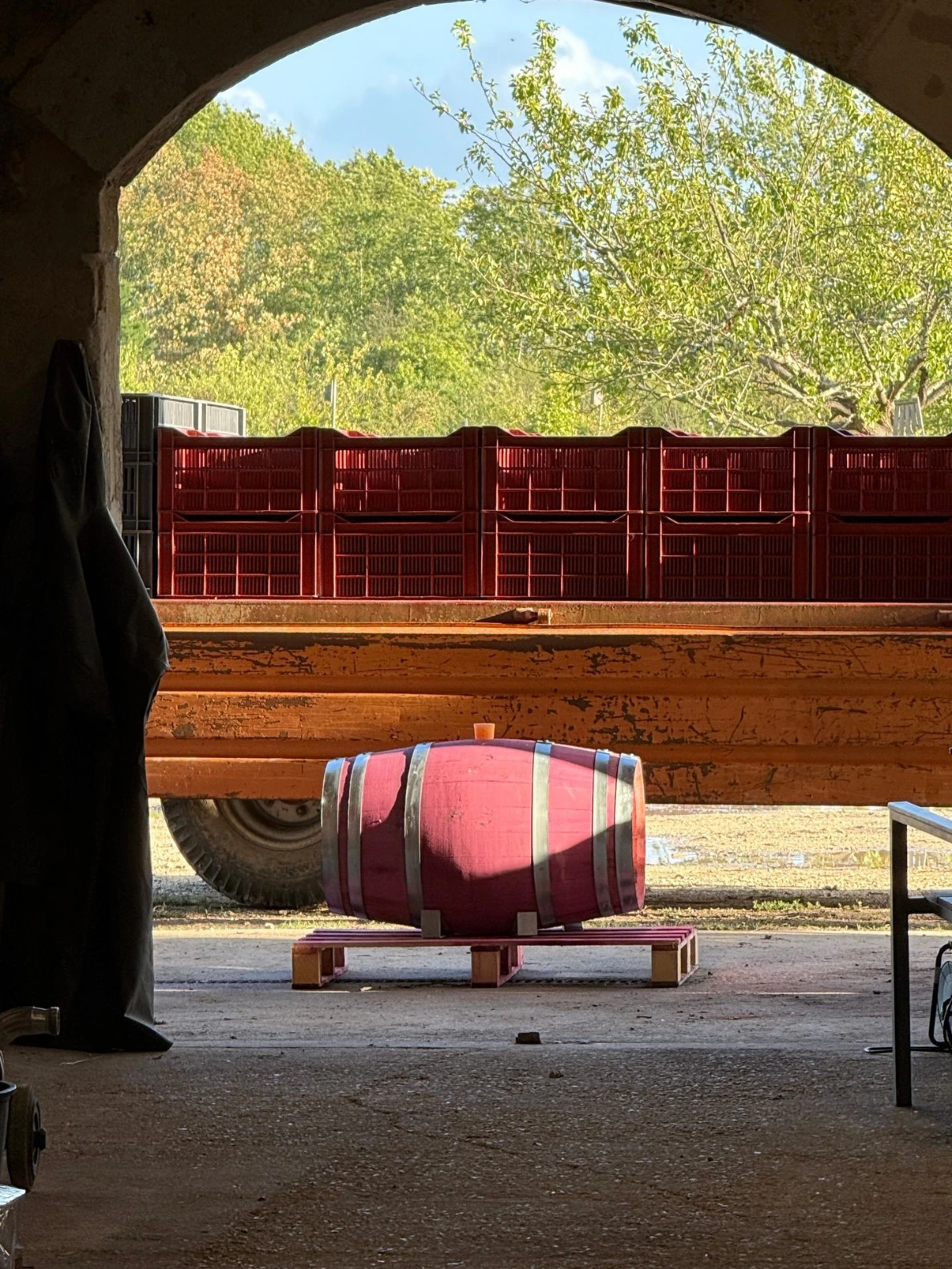
The wine is ageing in a chestnut-wood barrel. I coloured the outside with the pink lees from the bottom of the fermentation tank. It will not change the taste, but it looks very cute.
A little patience
Made in 2025, PINKY will age for at least five years before we make it available to buy. But if you come to Shuette and ask, we may give you a sample to try.
I think it’s going to be great.